Scorpion control in Columbus, OH addresses rare but high-stress micro-infestations typically introduced into Franklin County via commercial freight, nursery shipments, or cross-country residential relocations. Although…
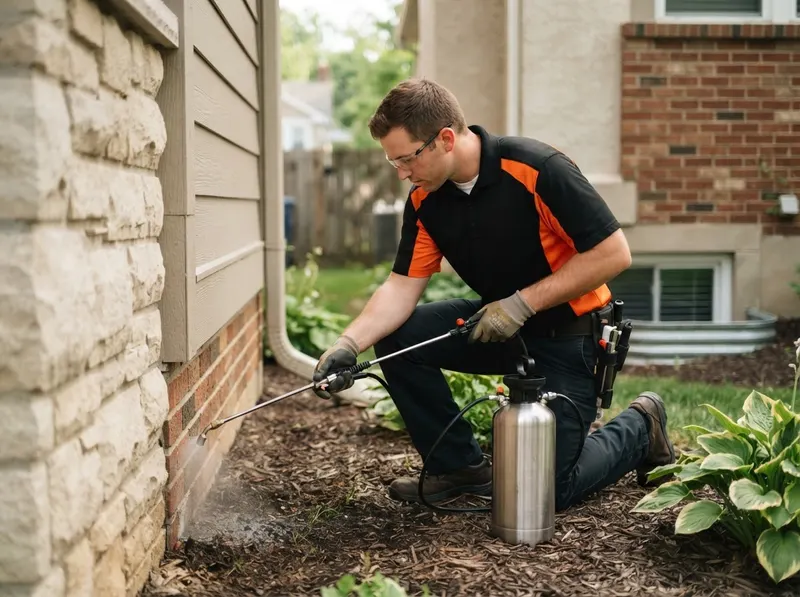
Scorpion control in Columbus, OH addresses rare but high-stress micro-infestations typically introduced into Franklin County via commercial freight, nursery shipments, or cross-country residential relocations. Although central Ohio sits north of dense native scorpion ranges, isolated groups of Ohio State University Extension Entomology confirmed specimens, such as the striped bark scorpion, infiltrate climate-controlled building envelopes through expansion joints, weep holes, and unsealed sill plates. Properties featuring historic stone foundations in German Village, damp riverfront subfloors in Victorian Village, or extensive botanical landscaping near Bexley require strict architectural sealing rather than indiscriminate broadcast chemicals. Structural protection prioritizes physical exclusion: every gap exceeding 1.6 millimeters (1/16 inch) along crawlspace entries, limestone thresholds, and utility penetrations must be mechanically sealed with copper mesh and silicone sealants to sever interior pathways.
Selecting localized physical barrier defense over generic broad-spectrum perimeter spraying provides superior environmental safety without saturating residential topsoil. Standard retail sprays often degrade under damp Ohio spring conditions, leaving chemical residues that wash into municipal stormwater networks governed by the Ohio Environmental Protection Agency. In contrast, PrairieLux Pest Elimination applies specialized micro-encapsulated formulations compliant with the Ohio Department of Agriculture Pesticide Regulation, placing protective compounds exclusively within subterranean structural voids, foundation cracks, and subfloor perimeters. By anchoring our protocol to standards outlined by the National Pest Management Association, our technicians eliminate active arachnids while safeguarding indoor air quality for children and domestic pets.
Long-term containment integrates nocturnal detection using 365-nanometer ultraviolet lighting across exterior retaining walls, landscape timbers, and stone patios. Because scorpion exoskeletons naturally fluoresce under concentrated UV wavelengths as documented by the National Institute for Occupational Safety and Health, visual audits pin down exact daytime harborage areas within decorative flagstone or stacked firewood. In neighborhoods like Clintonville, Upper Arlington, and Grandview Heights, shaded river-adjacent humidity mimics micro-climates where imported arachnids shelter against hot summer afternoons. Property owners can verify local drainage baselines through the Franklin County Official Portal or inspect yard safety metrics provided by the City of Columbus Department of Public Utilities.
Interior interventions focus on mechanical containment rather than endless recurring contracts. In historic structures throughout Olde Towne East, Franklinton, and Worthington, unexcavated cellar floors provide damp, undisturbed conditions suitable for hidden nesting. Moisture management measures align with standards from the U.S. Environmental Protection Agency Indoor Air Quality guidelines to drop subterranean humidity below 50 percent, creating inhospitable conditions for arachnids and their insect prey. All structural alterations mirror best-practice standards maintained by the International Association of Certified Home Inspectors and structural health benchmarks from the American National Standards Institute. A targeted one-time or two-stage exclusion system provides lasting defense without trapping homeowners into compulsory monthly agreements.
Every job gets a firm, written price after a free on-site visit.
Tell us about your scorpion control columbus, oh job in Columbus and we'll send a clear, written quote, usually the same day.
 PrairieLux Pest Elimination