Residential ant infestations across Columbus stem from environmental pressures unique to Central Ohio hydrology and aging structural architecture. In historic enclaves such as German Village and Victorian Village,…
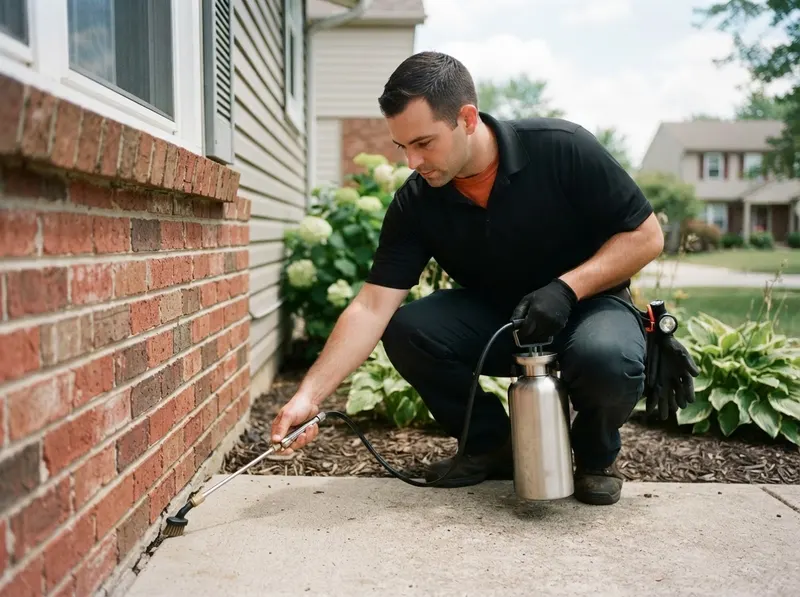
Residential ant infestations across Columbus stem from environmental pressures unique to Central Ohio hydrology and aging structural architecture. In historic enclaves such as German Village and Victorian Village, older brick footings, stone foundations, and settled lintels provide subterranean pathways directly into interior wall cavities. Along tree-lined corridors in Clintonville, Bexley, and Worthington, mature oak and maple canopies deposit damp organic debris, establishing ideal nesting corridors for carpenter ants (Camponotus pennsylvanicus) that quickly bridge to soffits, fascia boards, and porch framing. In newer or remodeled foundations throughout Grandview Heights, Upper Arlington, and the Short North Arts District, concrete slab seams and plumbing penetrations offer entry to foraging pavement ants (Tetramorium immigrans) searching for indoor moisture.
PrairieLux Pest Elimination approaches ant remediation through an architectural defense model rather than standard broadcast chemical applications. Modern eradication relies on the natural social biology of social insects regulated under the standards of the United States Environmental Protection Agency. By applying targeted non-repellent transfer chemistries containing active ingredients registered by the Ohio Department of Agriculture, foraging worker ants unknowingly transport the lethal active agent back to the queen and subterranean brood. This transfer protocol prevents the colony-splitting phenomenon known as budding, a severe risk when store-bought pyrethroid sprays repel foraging species like odorous house ants (Tapinoma sessile) and cause them to multiply into secondary nests throughout insulated drywall.
Eradication protocols follow a methodical sequence to guarantee long-term sanitary recovery. First, a certified technician maps interior trails and inspects high-moisture zones such as crawlspaces, basements, and plumbing risers, utilizing moisture meters calibrated to detect damp subflooring near kitchens and bathrooms. Second, species-specific carbohydrate or protein matrix baits are deployed inside tamper-resistant stations following guidelines established by the National Pest Management Association. Third, exterior perimeters receive a micro-targeted structural band treatment alongside foundation walls, weep screeds, and basement window wells. Fourth, physical exclusion seals hairline cracks and utility conduit gaps using pest-proof copper mesh and elastomeric sealants, backed by preventative yard maintenance standards from the Ohio State University Extension to eliminate overhanging branches touching exterior rooflines.
Property managers and homeowners dealing with structural infestations must weigh spot baiting against a full structural perimeter defense. While localized gel baits address minor seasonal foraging near a sink, they fail to resolve deep wall void infestations or satellite colonies nestled in crawlspace sill plates. Complete architectural treatment secures the entire building envelope, providing continuous barrier protection throughout seasonal temperature swings. PrairieLux Pest Elimination coordinates each visit with unmarked, low-profile deployment options upon request, safeguarding privacy across residential neighborhoods without recurring, mandatory service contracts.
Every job gets a firm, written price after a free on-site visit.
Tell us about your ant control columbus, oh job in Columbus and we'll send a clear, written quote, usually the same day.
 PrairieLux Pest Elimination