PrairieLux Pest Elimination operates with clinical architectural defense standards to protect exterior living spaces throughout Franklin County. Mosquito suppression targets the resting micro-habitats and breeding…
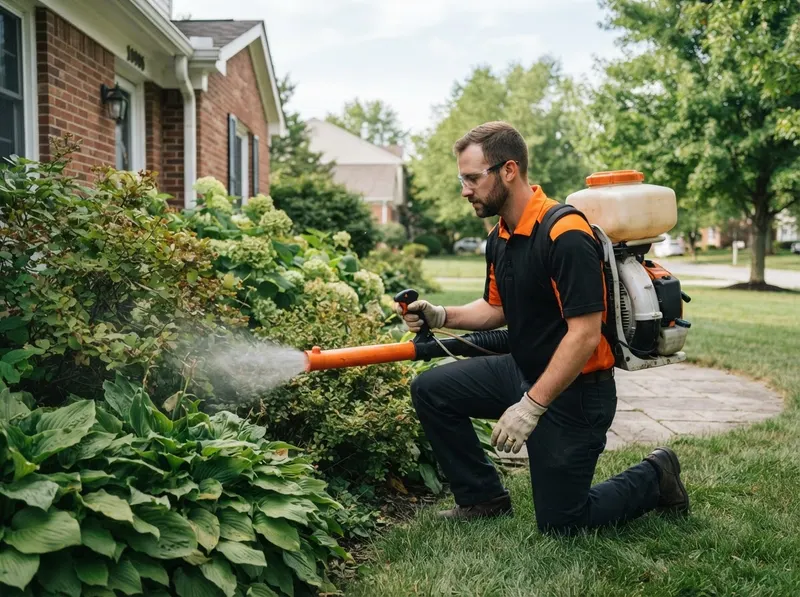
PrairieLux Pest Elimination operates with clinical architectural defense standards to protect exterior living spaces throughout Franklin County. Mosquito suppression targets the resting micro-habitats and breeding hydrology unique to Central Ohio properties. The regional mosquito season begins when sustained ambient temperatures cross 50°F, prompting dormant eggs of the northern house mosquito (Culex pipiens) to hatch in stagnant surface water. Properties situated near the Scioto Mile Promenade or low-drainage ravines in Clintonville and Worthington encounter dense swarms that disrupt outdoor recreation. Field technicians identify hidden reservoir zones, such as clogged architectural gutters, irrigation collection basins, and shaded retention areas, before deploying targeted controls.
Residential yards vary widely in structural layout, requiring distinct treatment strategies rather than broad-spectrum blanket chemical dumping. In historic, high-density districts like German Village, Victorian Village, and Olde Towne East, small courtyard footprints demand precise, low-drift micro-nozzle applications along brick retaining walls, ivy groundcovers, and underside foliage where adult mosquitoes harbor during daytime heat. Conversely, sprawling estates in Bexley and Upper Arlington feature extensive ornamental landscaping, canopy trees, and ponds that require high-capacity misting combined with Bacillus thuringiensis israelensis (BTI) larvicide ring placements to halt reproduction in open water without affecting non-target beneficial species.
Choosing targeted barrier mitigation over non-selective thermal fogging avoids collateral damage to pollinator zones around Franklin Park Conservatory and Botanical Gardens or the community plots near Whetstone Park of Roses. The operational trade-off centers on spatial longevity versus environmental footprint: broad chemical fogging knocks down only airborne adults for a few hours, whereas micro-encapsulated foliage treatments bond to leaf surfaces, establishing a 21-to-30-day residual barrier that breaks successive reproductive generations. Commercial and residential clients can coordinate discreet, low-profile property treatments that align with local standards outlined by Franklin County Public Health and municipal Columbus Public Health vector control guidelines.
To ensure complete property protection, PrairieLux Pest Elimination coordinates treatments alongside established environmental directives, referencing vector surveillance research from the Ohio Department of Health, pesticide applicator compliance from the Ohio Department of Agriculture, and regional climate telemetry from the National Weather Service Wilmington Office. Exterior surface protection adheres to urban runoff best practices established by the Ohio Environmental Protection Agency, while pesticide safety metrics follow standards established by the National Pesticide Information Center, and professional application methodologies align with the American Mosquito Control Association. Property evaluations can be arranged directly by contacting (330) 552-0605.
Every job gets a firm, written price after a free on-site visit.
Tell us about your mosquito control columbus, oh job in Columbus and we'll send a clear, written quote, usually the same day.
 PrairieLux Pest Elimination